Inside One of London’s Remaining Bespoke Shoemaking Workshops
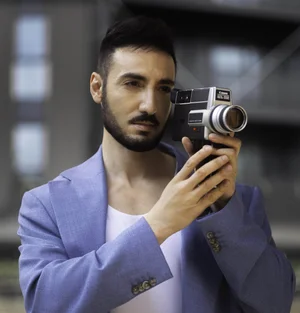
William Efe-Laborde | The Art of Bespoke Shoemaking . A film by Aris Mercury
I walked into William Efe-Laborde‘s workshop on one of the hottest days London had seen this summer.
I stepped through the door and the temperature seemed to drop, not just physically but emotionally. It felt as though I had entered another world altogether.
There are workshops that feel like places of work, and then there are workshops that feel like time capsules.
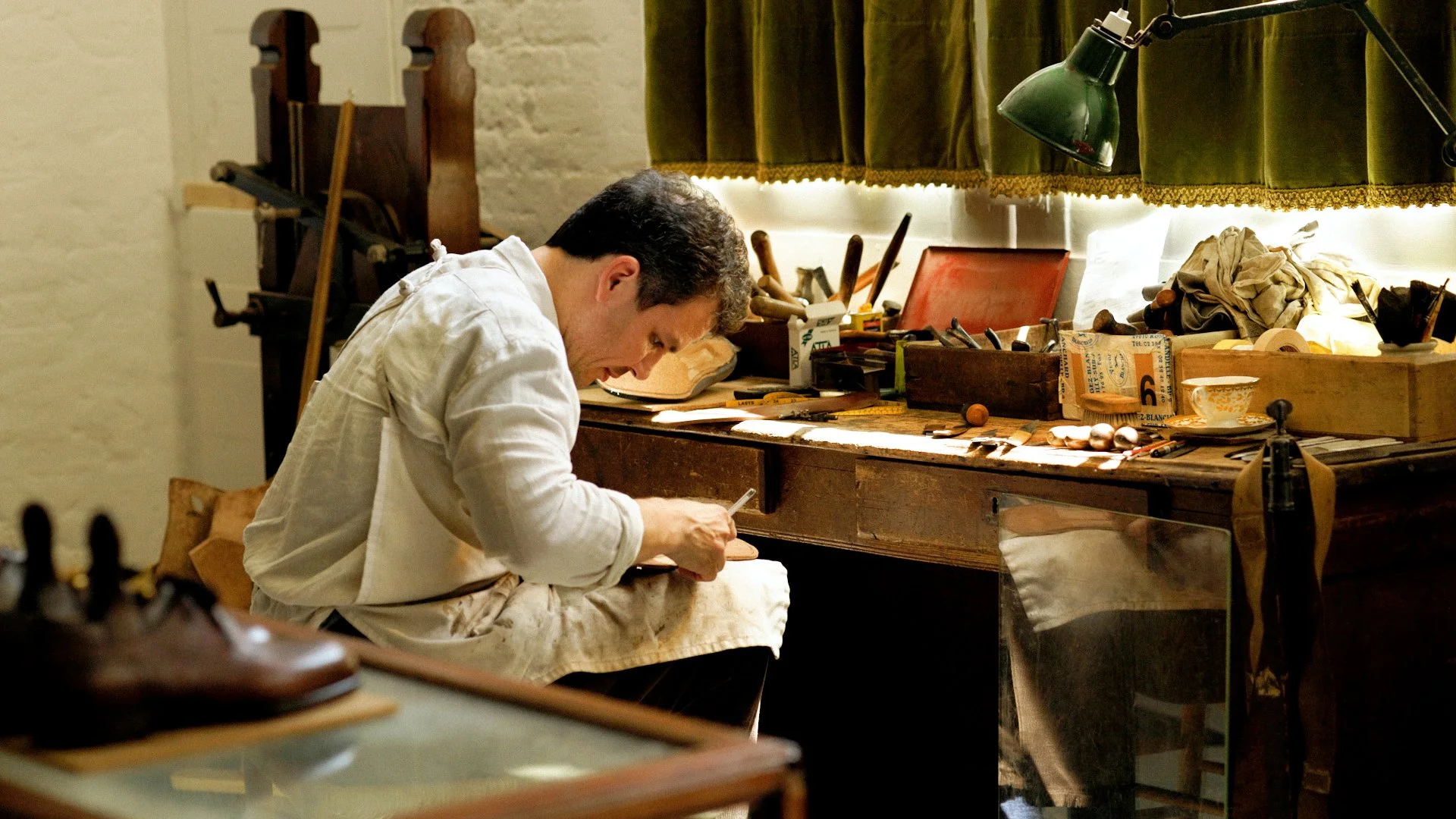
William working inside his London Studio. Photo by Aris Mercury
William’s shoemaking studio is the second kind. At first, you notice the objects: the wooden lasts, the blades, the old tools, the leather, the boxes, the photographs, the sword resting quietly in the room and a set of suit with smart shoes on chair waiting to be worn or left there from 100 years ago.
But after a while, the space begins to reveal something deeper. It is not just a place where shoes are made.
It is a place where the past is still being handled, sharpened, stitched, carved, and worn.William makes bespoke shoes by hand, using methods that belong to another age but still respond to something deeply human: the shape of a foot, the weight of a person, the way someone stands, walks, works, and lives.
“The first step is meeting the customer and taking this black outline, this draft, and some measurements of their feet,” he explains. “There are about seven measurements. I’ve got an outline of their heel, the heel shape, cross-section, some notes, and then instructions about the style of toe that they want, the heel height, and lots of little observations.”
From that first outline, William begins to carve the wooden last — the form around which the shoe will be
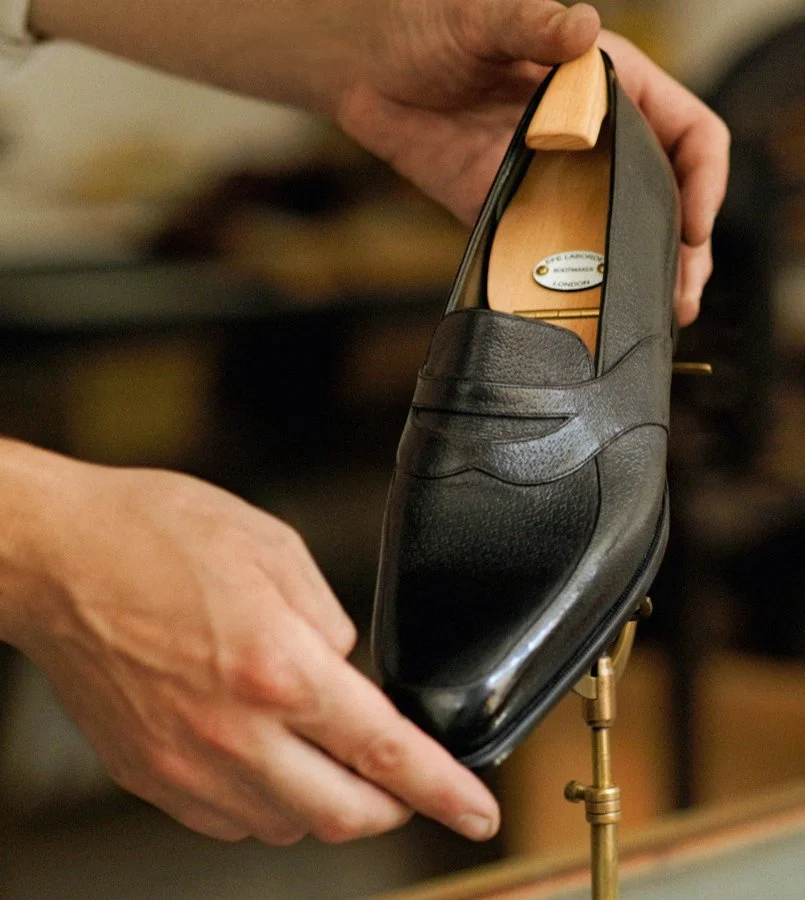
One of William’s finished pieces. Photo by Aris Mercury.
be made. It is an object that has to be technical, but also strangely intimate. It carries all the irregularities of the body.
“It’s really rare — in fact, I’ve never seen it — to have somebody with an identical pair of feet,” he
says. “You always have one which is maybe a quarter or even half a size shorter or longer. Differences in the arch. Maybe one side has a little problematic area with the toes needing more room. All of that is built into the last and into the shoe.”
This is where bespoke becomes more than luxury. It becomes a kind of translation. A person’s body is read, interpreted, and slowly turned into form. For William, the art is not simply in making something beautiful. It is in knowing where to leave space, where to hold the foot, where to follow the body, and where to gently correct it.
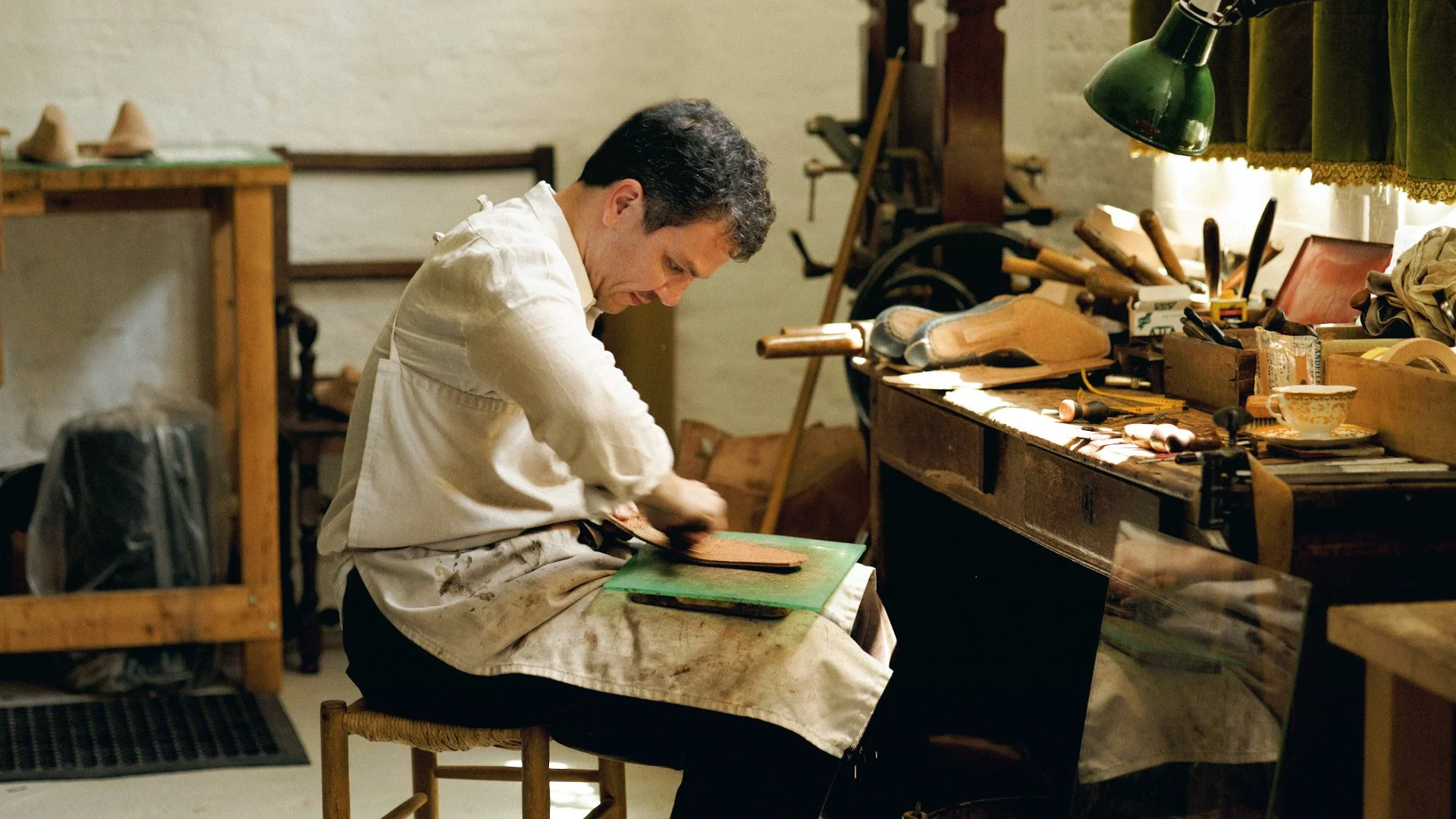
William working inside his London Studio. Photo by Aris Mercury.
“Some people will want a lot of space, and other people will want to feel very held in,” he says. “It depends on the kind of activity they do day to day, their weight, their stance as well. There are lots and lots of factors.”
The most beautiful part of the process may be that much of it cannot be rushed. It has to be felt through repetition, pressure, sound, and rhythm.One of William’s masters taught him this not by watching, but by listening.
“He wouldn’t even look at me,” William remembers. “He would just listen and go, ‘No, no, no, that’s not sounding right.’” The sound mattered because the movement mattered.
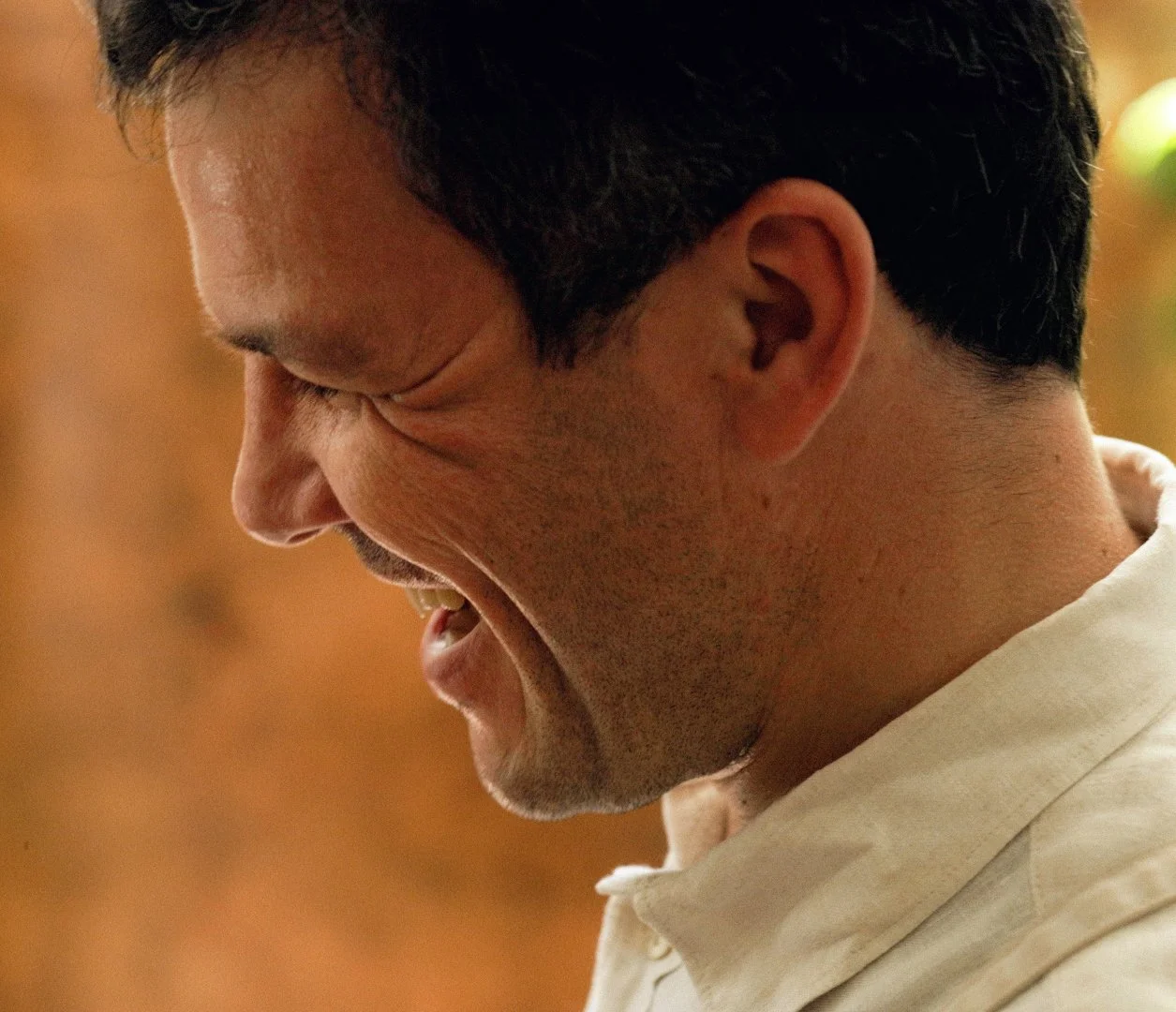
William at his studio. Photo by Aris Mercury
“You have to do long, continuous swoops,” William says. “The reason for that is that you want continuous, harmonious curves when you’re carving.
You mustn’t rush it. You have to build this flow into your work in order to get those beautiful lines.” That word — flow — returns again and again in William’s way of speaking.
It is there in the carving of the last, in the shape of the sole, in the invisible stitching of the waist, and in the final elegance of the shoe.
“There’s a word to describe elegance ”he says. “We call it range. When you’re creating the wooden last,and when you’re creating the pattern, all the lines need to be concurrent.”
The shoe, in other words, is not made from separate details. Everything has to belong to everything else. “If you focus on one area in particular, you just can’t get there,” he says. “So it’s almost like a philosophy that extends throughout the whole making of the shoe.”
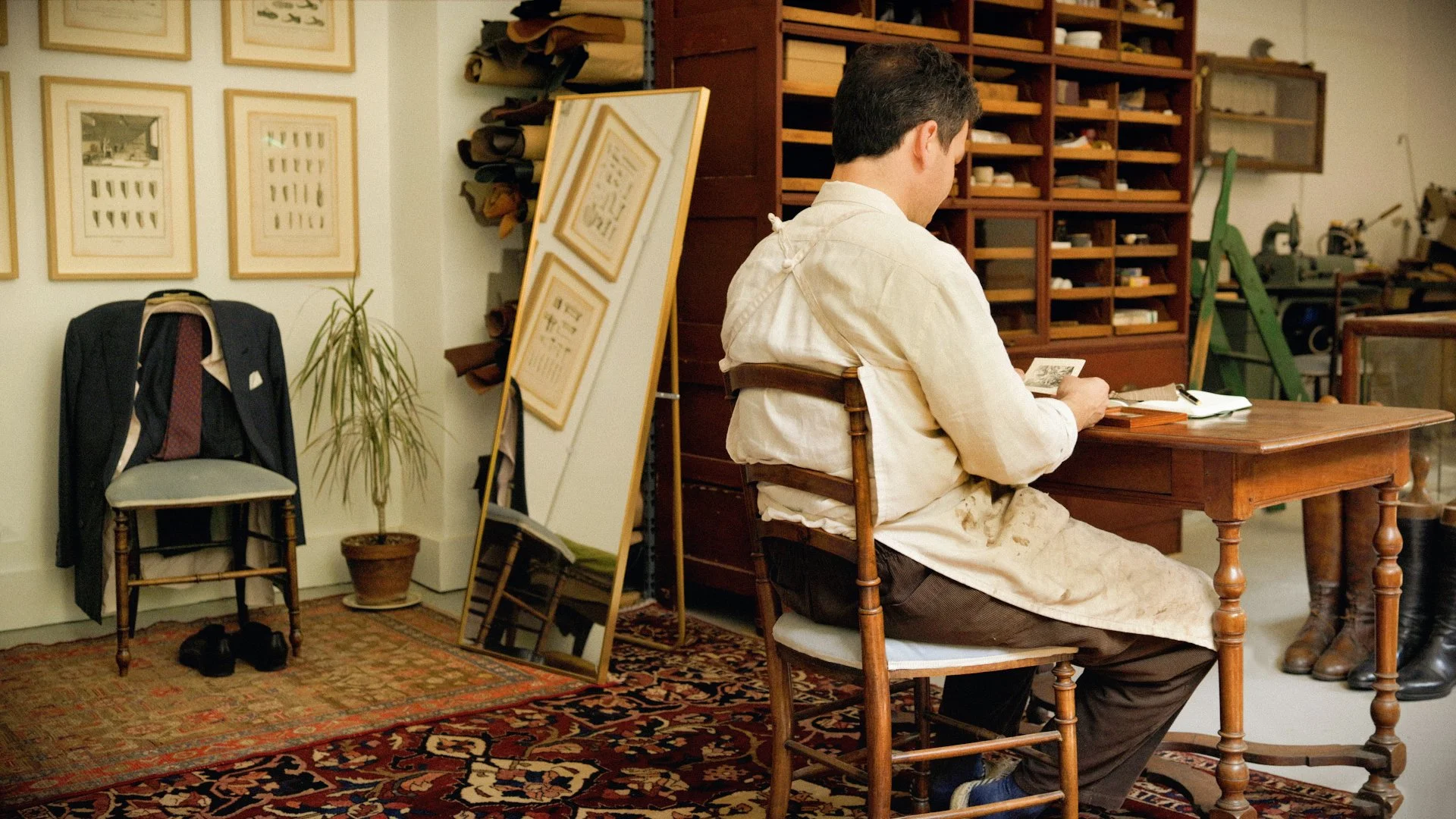
William going through his family photographs . Photo by Aris Mercury.
William’s own route into shoemaking was unusual. He did not inherit a workshop in the obvious way. He came to it through discomfort, curiosity, and a fascination with traditional English craft. “The real reason I got into shoes is because I have wide feet and was suffering a lot,” he says.
Eventually, he found himself at John Lobb, the historic London shoemaker.“Just the atmosphere of the shop ,it was like stepping back into the nineteenth century,” he says. So I thought, maybe I could learn to make a pair.”
The result is a workshop that feels personal rather than performative. It is full of objects that carry stories. In one cabinet are old shoemaking tools made in Soho, on Wardour Street — a street now associated with restaurants, coffee shops, and magazines, but once home to people forging and making things by hand. “If you look at the tools in that cabinet, they were all made in Soho,” William says. “Amazingly, they’re all made in the middle of Soho.”
“You have to use a whole lot of them to make one pair of shoes,” he says. “You’ll typically use about twelve or thirteen different things just for one pair.”
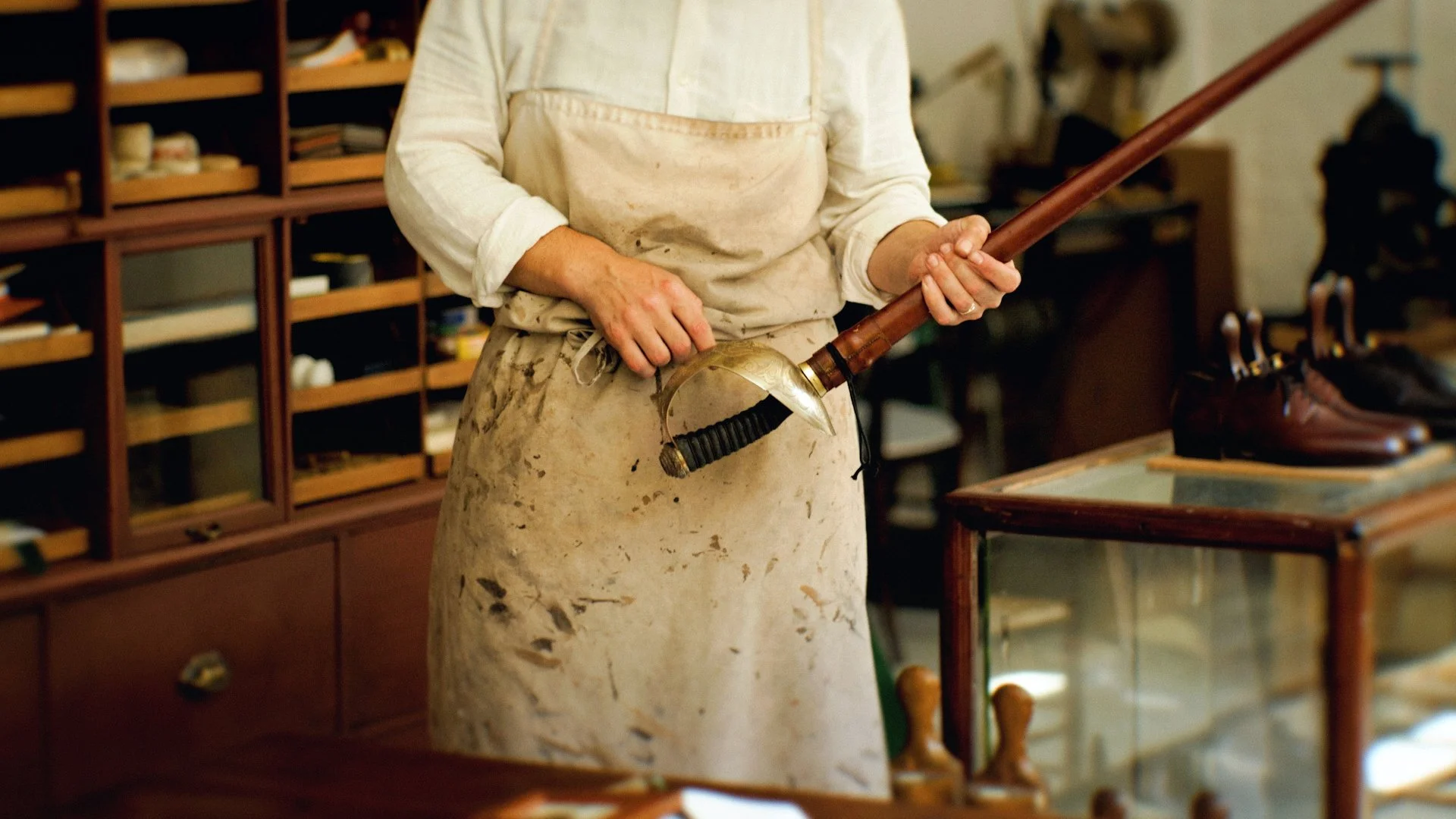
William holding his great-grandfather’s sword . Photo by Aris Mercury
Perhaps the most unexpected object in the room is the sword. It belonged to William’s great-grandfather, who served in the Royal Horse Guards. He was sent to India in the early 1900s, stationed in the north of India and Rajasthan, and later spent time in Hong Kong. William’s grandmother even won the first ladies’ horse race organised in Hong Kong.
When his great-grandfather returned to Britain, ordinary life around London felt too unfamiliar. After a few years, he took another job in the North Saharan Desert as a desert locust patrol.
“It was basically him, a Range Rover, a gun, and a dog, following these swarms of locusts,” William says. “He would radio in to the nearby villages, warning them, so people could make preparations to protect the crops from the oncoming locusts.”
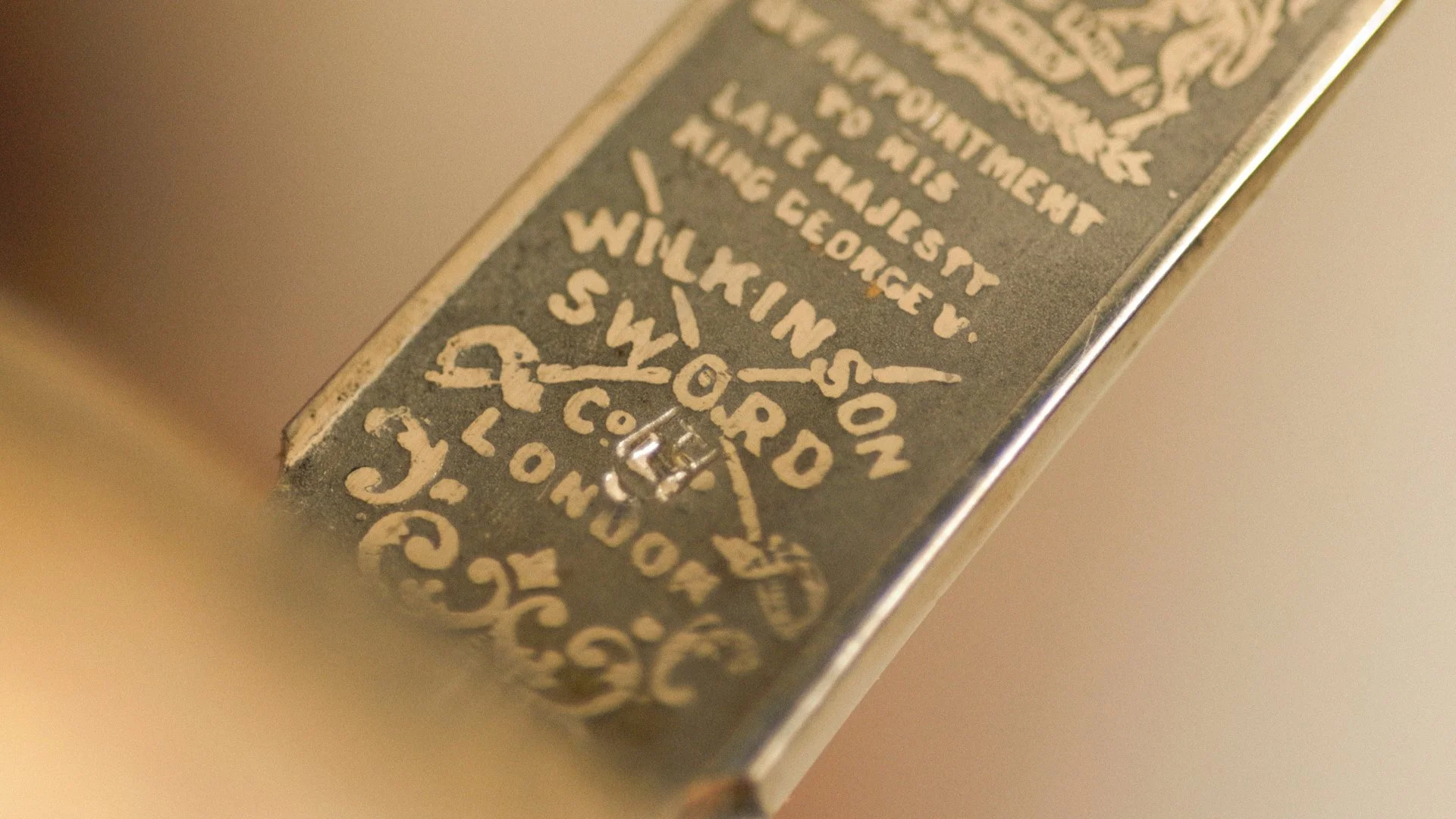
Close-up of a sword made by Wilkinson over 100 years ago. Remarkably, the company’s logo remains unchanged to this day. Photo by Aris Mercury.
The sword remains in the workshop as a memento of that life. It is about a hundred years old, made by Wilkinson Sword, with a hand-stitched hilt.
“I never appreciated that until I started doing this,” William says. “It’s just beautifully done.” The sword is not only a family object. It also connects back to the work. The leather, the stitching, the ceremony, the military history, the relation between dress and posture — all of it quietly belongs in the room.
“It’s just a lovely thing to have around,” he says. “And a good connection with the past.” That connection becomes even stronger when William talks about his French side.
His ancestors lived south of Bordeaux, within a small radius of land for at least four hundred years. They belonged to that place. In an old photograph, William points to his great-grandfather Gaston, known as “Le Merle” — the blackbird — because he was very thin.
Then there is another ancestor, a man from the Pyrenees whose name, Cap de Bosc, meant “wooden

William holding a frame with a family photograph. Photo by Aris Mercury.
head” in the local dialect — a way of saying someone was stubborn. Later, William discovered that this man had also been a shoemaker.
“My grandmother had an immense memory,” he says. “Amazingly, the only thing she knew about this particular person was that he toiled all his life, and that he was a shoemaker. By then, William had
already been making shoes for several year.
The work is physically demanding. The leather is hard. The body is involved. The hand repeats the same gestures again and again. But for William, if you love it, the difficulty changes shape.
“Your passion and your involvement in what you’re doing takes more weight,” he says. “The people who do this craft immediately connect over that feeling.”
This is what makes shoemaking, for him, more than a profession. It is a way of reaching backwards.“It’s a good way of remaining in contact, and establishing contact with people you never met,” he says.
“Through what you do, and through the knowledge that they did exactly the same thing, in exactly the same way, you’re able to make that connection.”

Portrait of William inside his London Studio. Photo by Aris Mercury
Some customers arrive knowing exactly what they want: a particular leather, a precise amount of stitching, even a few millimetres of difference between the lacing.
Others arrive with no clear idea at all, only the desire to have something made especially for them. “As you have a conversation and develop a rapport with somebody, you never make the same pair twice,” William says.
Some want comfort. Some want elegance. Some want to be guided. Some want to collaborate. Some want a shoe that can be walked in for years. Others care almost entirely about the line, the look, the drama.
“They tend to be a good reflection of the person, through the options and elements that they want,”
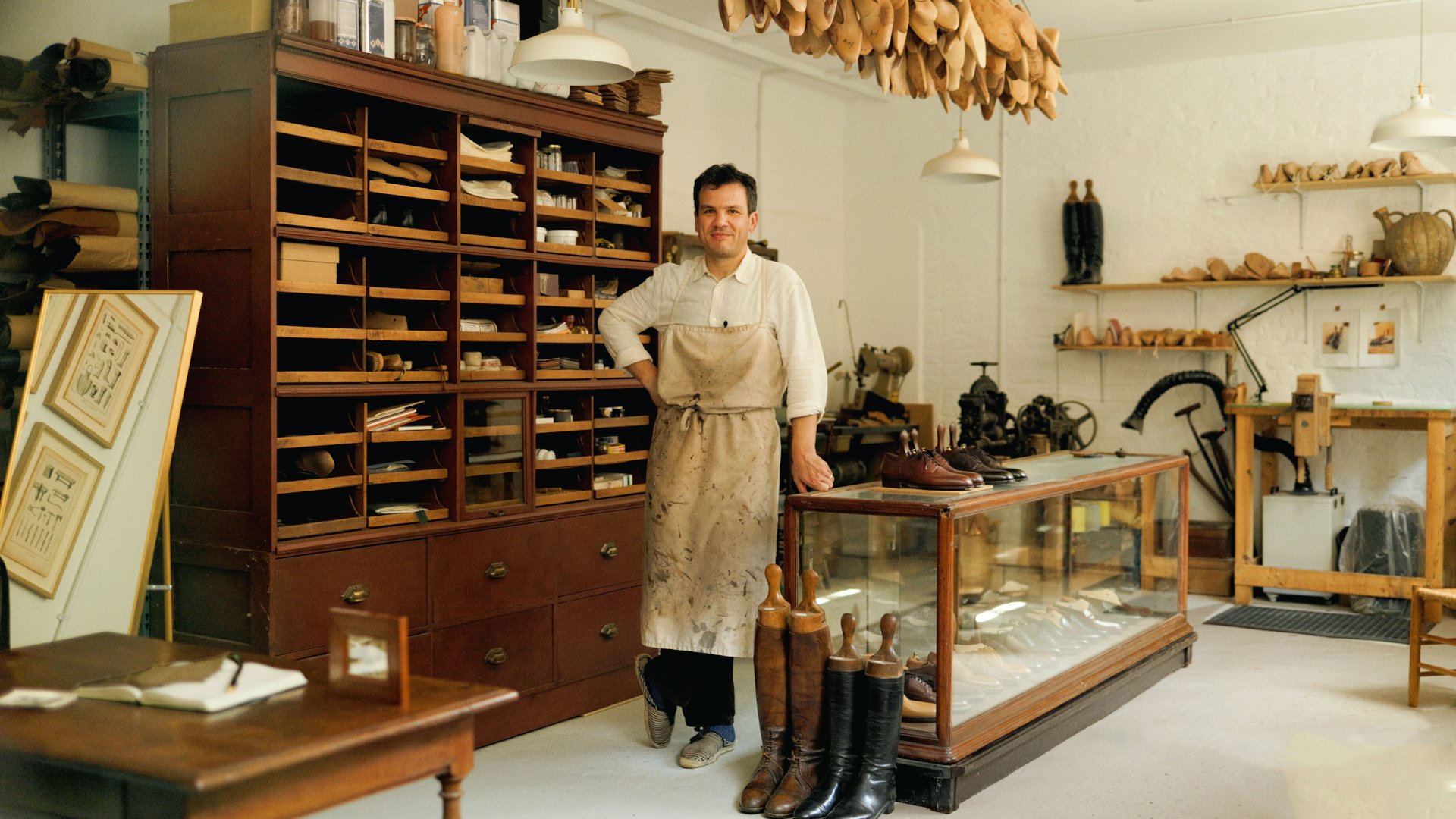
William inside his London Workshop. Photo by Aris Mercury.
After leaving William’s workshop, I realised I had forgotten a small piece of my filming gear in his studio.
In a way, I was almost pleased. It became the perfect excuse to return soon , to step back into that quiet world of leather, tools, memory, and time.
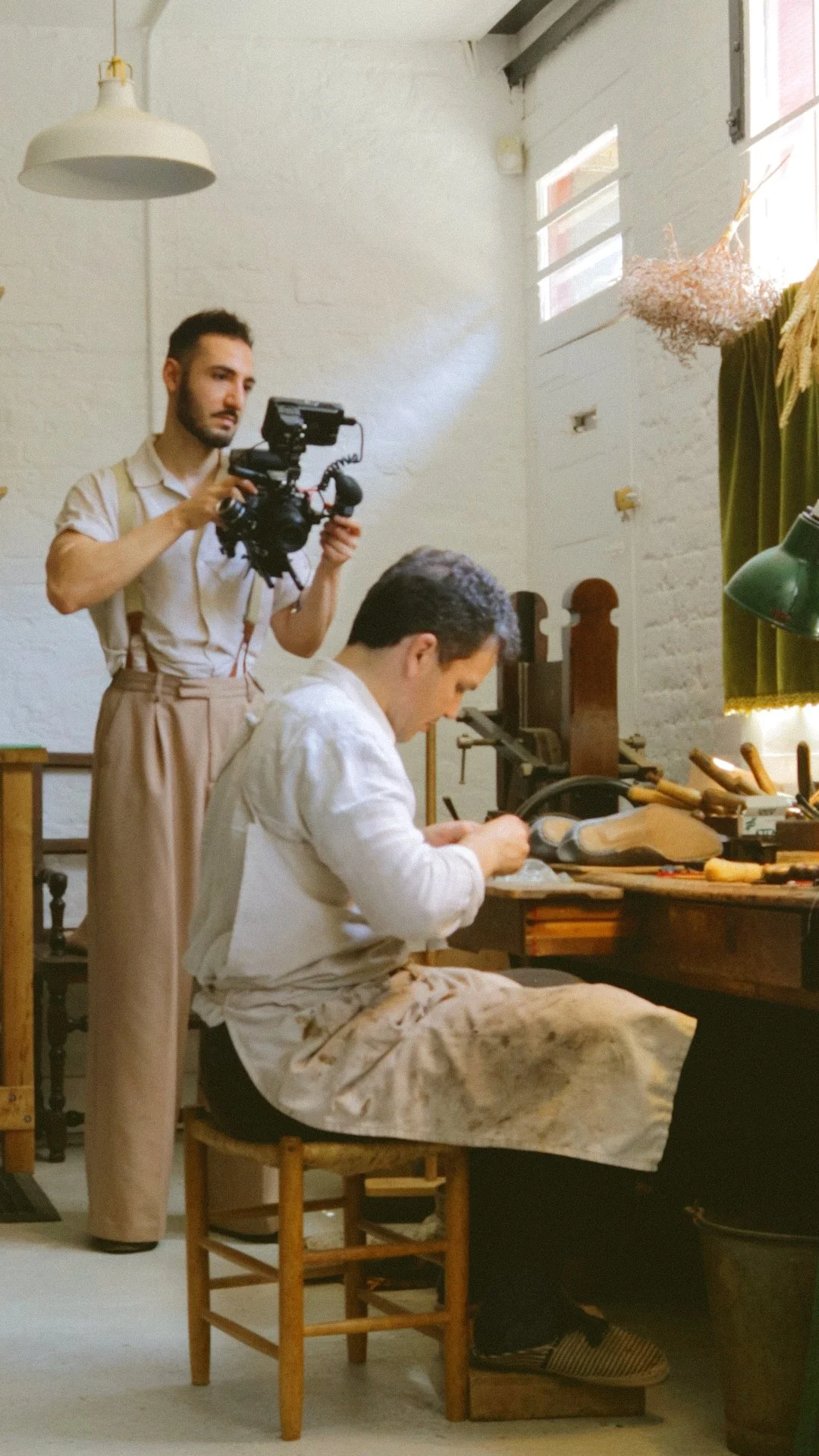
Backstage from the filming with William
The same afternoon I found myself thinking about my own grandfather. When I arrived home, I opened my wardrobe and I went through some of the shirts and trousers that I got from him.
Before long, I was wearing his shirts, and for the next four days I found myself reachingfor his clothes without thinking. I am fortunate that I am almost exactly the same size as he was, both in shirts and trousers.
There is something quietly fascinating about carrying something from the past into your everyday life. A shirt stops being simply fabric. It becomes a continuation of someone else’s story. Perhaps that is what stayed with me most after meeting William.
In an age that celebrates speed and constant change, William reminds us that some things deserve to be carried forward unchanged.