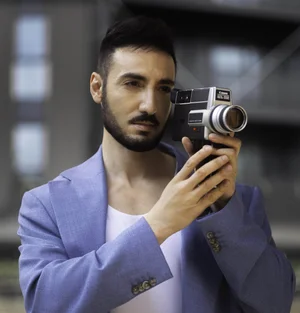
Inside Patrick Hughes’s Studio: On Illusion, Infinity, and Still Thinking of New Ideas
Inside Patrick Hughes’ Studio: On Illusion, Infinity, and Still Thinking of New Ideas . A film by Aris Mercury.
I recently visited Patrick Hughes in his London studio and spoke with him about his work, his ideas, and how new pieces begin.
Patrick has been in this studio for 30 years. “It hasn’t changed that much in here,” he told me, “but it changed a bit out there outside.”
Even after all these years, the space feels active, with work happening in different rooms, models being built, paintings in progress, and pieces being prepared to ship around the world.
A presence shaped by a lifetime of ideas
When I first met Patrick, before we even began speaking about the work, I was struck by his presence. He has a kind of elegance that feels completely natural ,in the way he dresses, the way he speaks, and the quiet confidence he carries. Not confidence in a loud or self-important way, but the confidence of someone who has spent a lifetime following his own thoughts and still finds them worth pursuing.
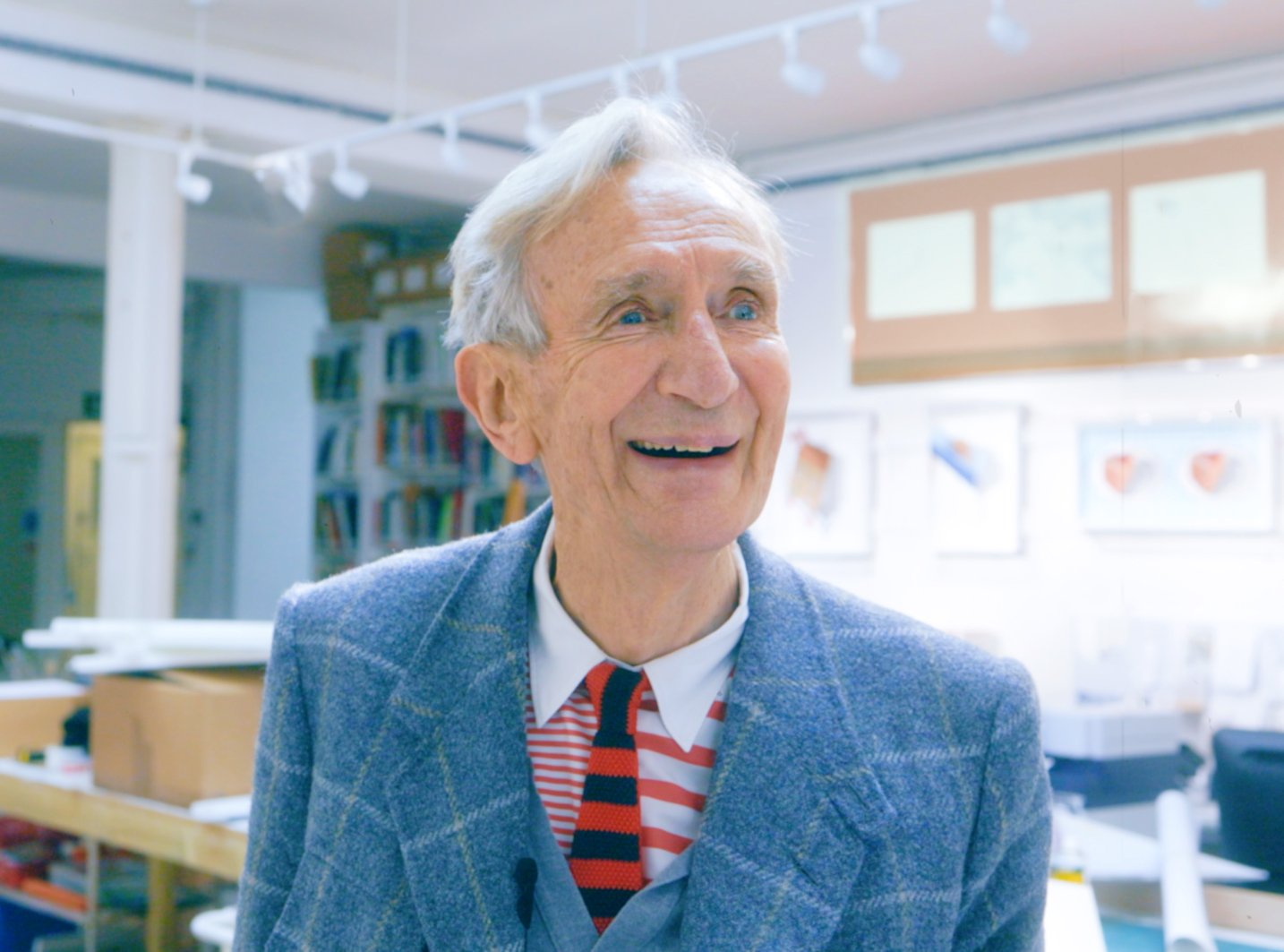
Patrick Hughes in his London Studio . Photo by Aris Mercury
There was also something very generous in the way he spoke about other artists. When he mentioned Magritte and other surrealists, he did it with real respect and excitement, almost like someone still discovering and enjoying the history he is part of. And yet, sitting there with him, I kept thinking that his work belongs in that same conversation , not as a footnote to surrealism, but as something equally strange, intelligent, and original.
One of the most interesting things he spoke about was how his work has changed in recent years. For many decades he made the reverspective works he is best known for, but more recently he started moving in a different direction.
“For many years I made these reverspectives,” he said. “And then I made the dice… and think outside the box. Because I’m within the rectangular box. But then I let my things free.”
He explained that before, many objects would exist within a room or a defined space inside the artwork. Now he is more interested in concentrating on individual things, books, tables, objects on their own.
“It was a big change for me,” he said, speaking about the last three years.
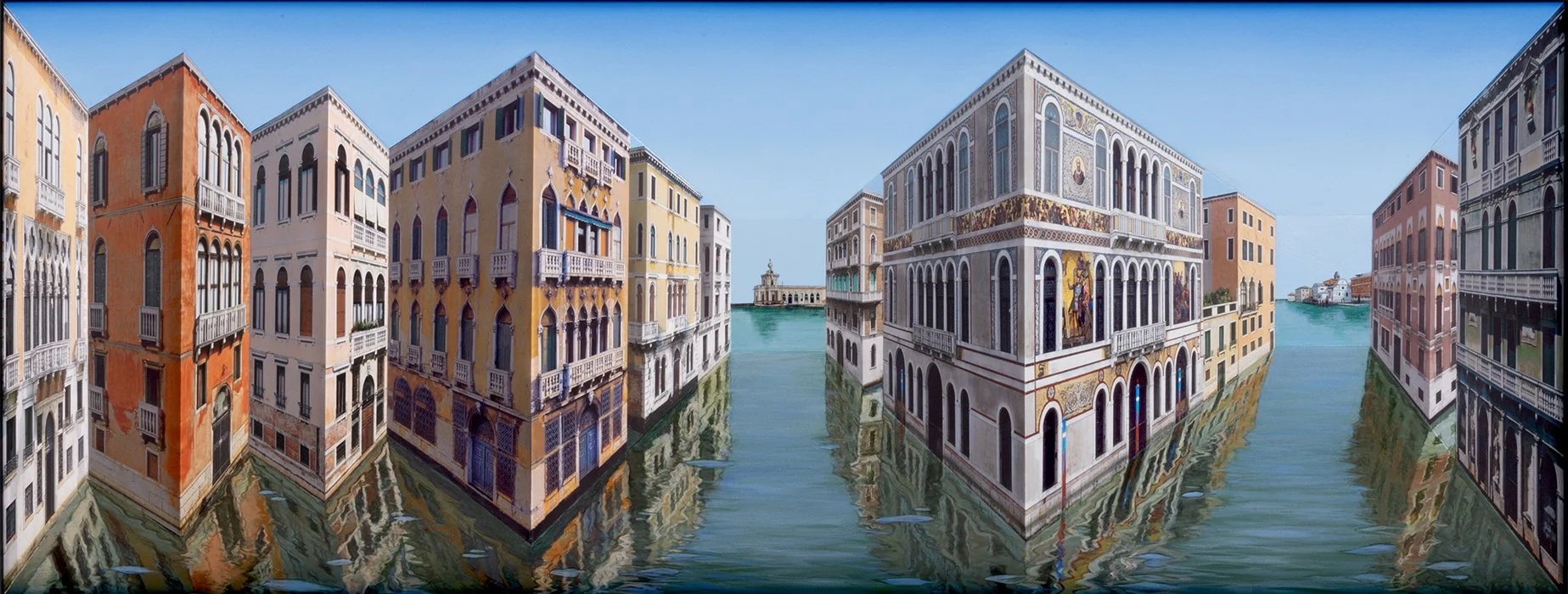
Viva Venezia , a recent work from Patrick’s Collaged Paintings . Photo from www.patrickhughes.co.uk
How an idea begins
I asked Patrick how he usually develops a new work , whether he sits and thinks first, or whether he needs to physically make something before he understands it. He showed me exactly where it starts.
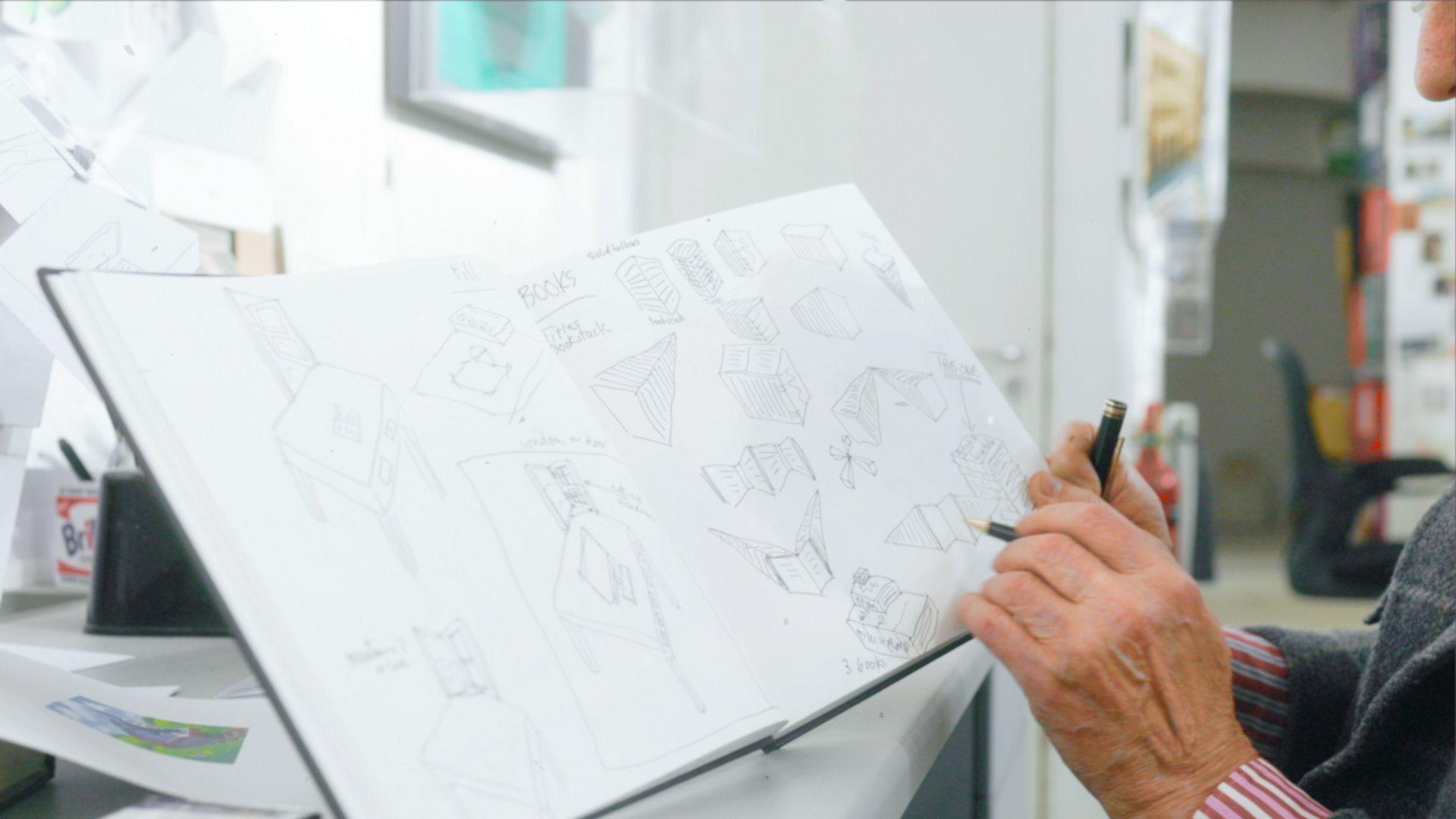
Patrick showing his sketchbook . Photo by Aris Mercury
“The first thing that happens Aris,” he said, “is that I sit here with this sketchbook.”
From there, he starts thinking through possibilities. He gave me examples of the kinds of ideas that come to him: a railway train going to infinity, a table with a typewriter, a truck on a railway line, books in different forms, or objects stretching away into space. What if I had a railway train because I’m interested in infinity,” he said.
That idea of infinity came up again and again in our conversation. He is not just thinking about objects, but about where they can lead visually and mentally.
After sketching, the process continues with the help of the team. Models are built first, often in wood and foam board, then developed further on the computer before becoming finished painted works.
He showed me how one idea moves through different stages , from the sketchbook, to a model, to a digital version, and eventually to the final piece.
The studio process
One thing that stood out during my visit was how much is made in-house. Patrick explained that the works are built there, the frames are made there, and many of the details are worked through in the studio itself.
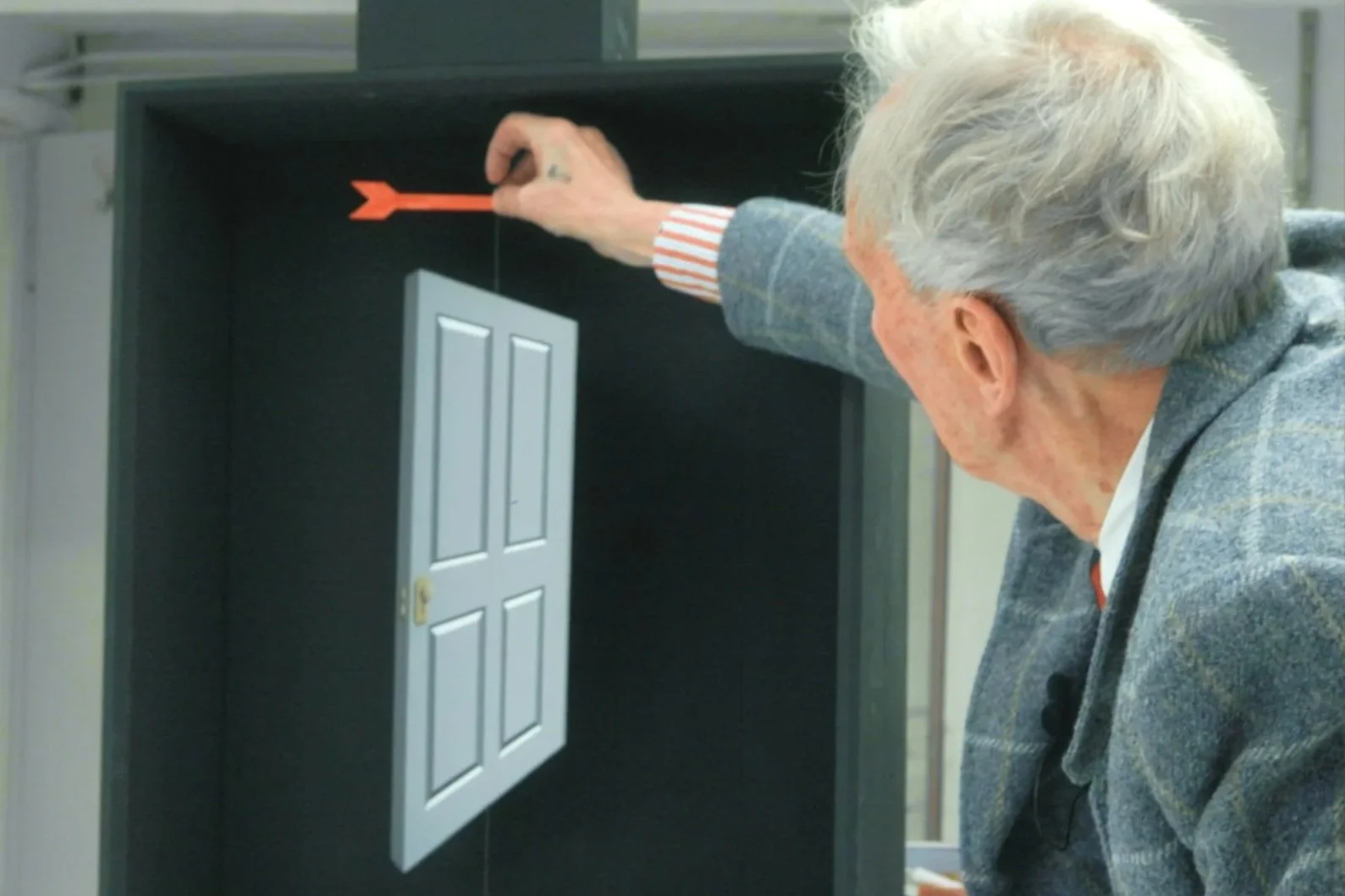
Patrick and his Ames door piece . Photo by Aris Mercury
He showed me an Ames door piece with a motor based on the Ames window illusion , which rotates and creates a different kind of effect from his usual works.
“This is the only artwork that you don’t really have to move around,” I said to him. “Yes,” he replied. “You just stand in front of it.”
He still seems genuinely excited by new ideas and different ways of creating visual experience.
“Oh yes,” he said when I asked if he still gets excited by new work. “You have to think new thoughts.”
What became clear very quickly is that Patrick is not mainly interested in optical illusion as a trick. For him, the deeper subject is infinity, paradox, and the experience of perception.
“I’m not really interested in the book or scenery or optical illusions,” he said. “What I’m interested in is how to create in your mind the appearance of infinity.”
He also spoke about philosophy, logic, Zeno, paradoxes, and oxymorons. These are not separate from the work , they are part of how he thinks.
“What I’m interested in is how to make infinity so intimate”
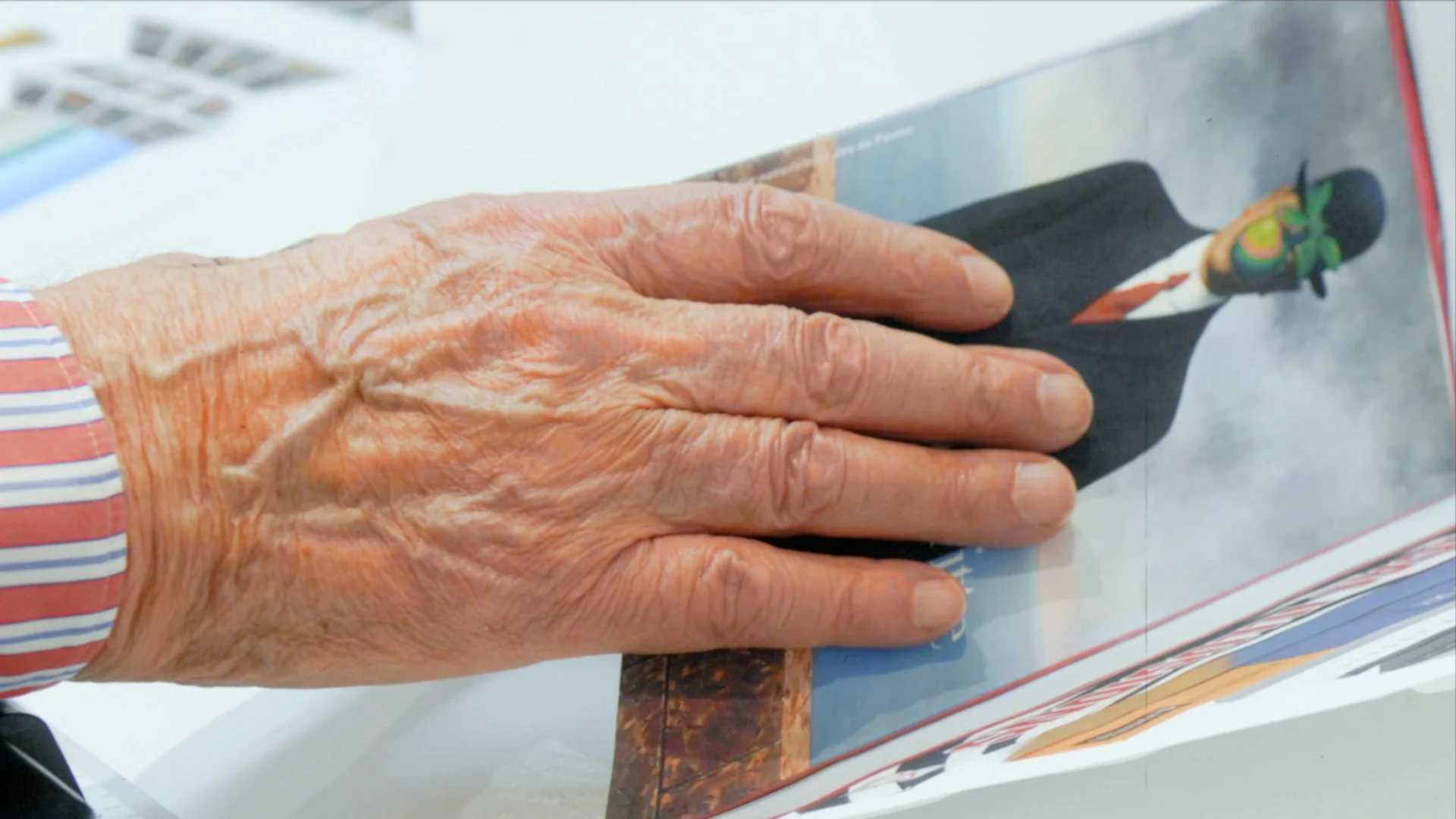
Patrick with one of his Magritte works. Photo by Aris Mercury
That phrase stayed with me. It seems to describe his work very well. His pieces often deal with scale, space, and movement, but not in a distant or abstract way. They bring those ideas close to the viewer.
Beyond painting a surreal scene
At one point, Patrick showed me a work related to Magritte,
and that led to one of the most interesting parts of the
conversation. What I loved was how respectfully he spoke about Magritte and the surrealists.There was no need to
place himself above them, or to explain his work by diminishing theirs. He seemed genuinely excited by their
imagination.
But what became clear to me is that Patrick’s work does not
simply follow surrealism , it extends it into physical experience. A Magritte painting might show you a strange image, an impossible object, or a visual contradiction. Patrick’s work makes your own body participate in that contradiction
“In my work, you actually have a sensation of surreal quality,” he said.
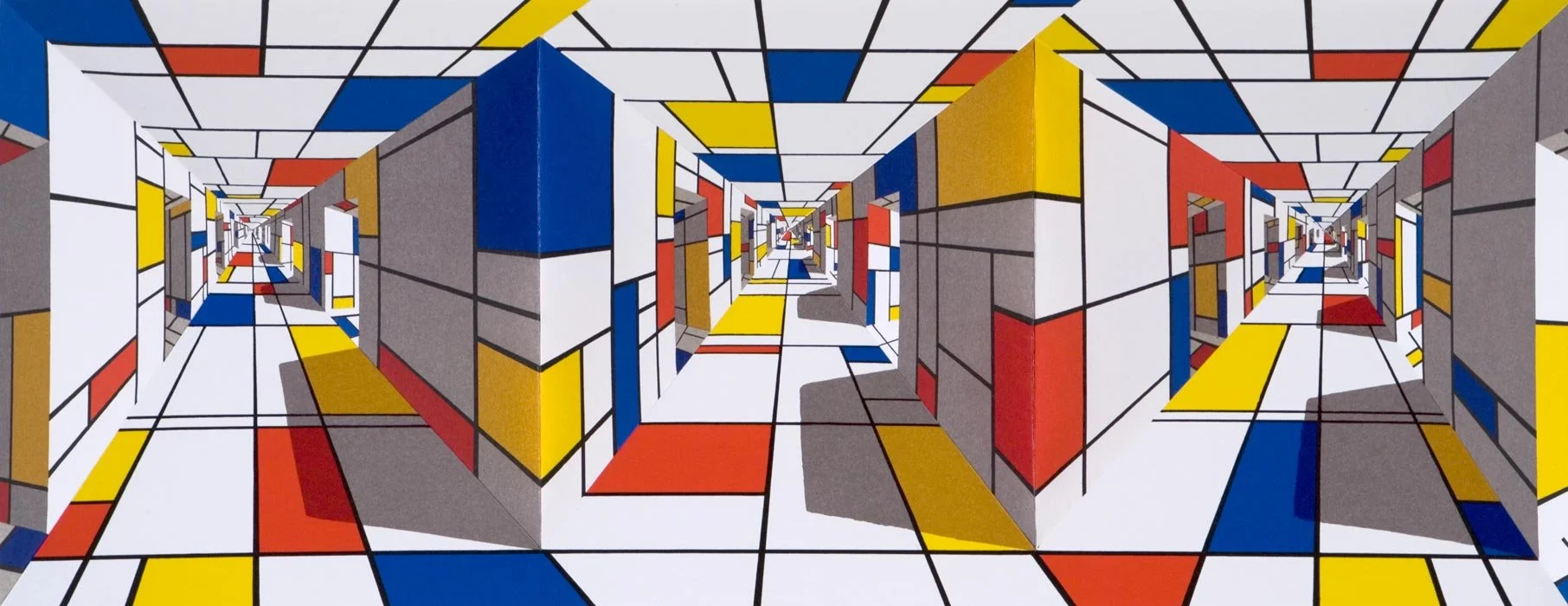
Purism by Patrick Hughes . Photo from https://www.patrickhughes.co.uk/
That felt like an important distinction. With Magritte, you may see a painted image of something impossible, like a carrot becoming a bottle, but you do not actually experience it happening. In Patrick’s work, the impossibility seems to happen in front of you. You move one way, and the work moves another. A solid object becomes hollow. A room turns itself inside out. The viewer is no longer only looking at a surreal idea — they are caught inside one.
“You are walking to the left and it appears to move to the right,” he said
That is probably why the work feels so memorable in person. It is not only about looking at an image. It is about your own perception being challenged while you move around it.
Turning perspective inside out
One of the strongest moments in the interview came when Patrick spoke about the imaginative leap that changed everything for him
“The most powerful thing that I ever did with my imagination, was to turn perspective inside out.”
He described it very simply: in normal perspective, things get smaller in the distance. In his work, he made things get smaller as they come closer.
“It’s very, very powerful to change your world”
I think that line says a lot about what makes his work special. He is not only inventing a visual effect. He is changing the way space behaves, and in doing so, changing the viewer’s experience of the world for a moment.
He also told me about the first time he discovered that one of these works actually worked.
“I didn’t know it would happen,” he said. “And I put it on the wall… and wow.” He was only 24 at the time.
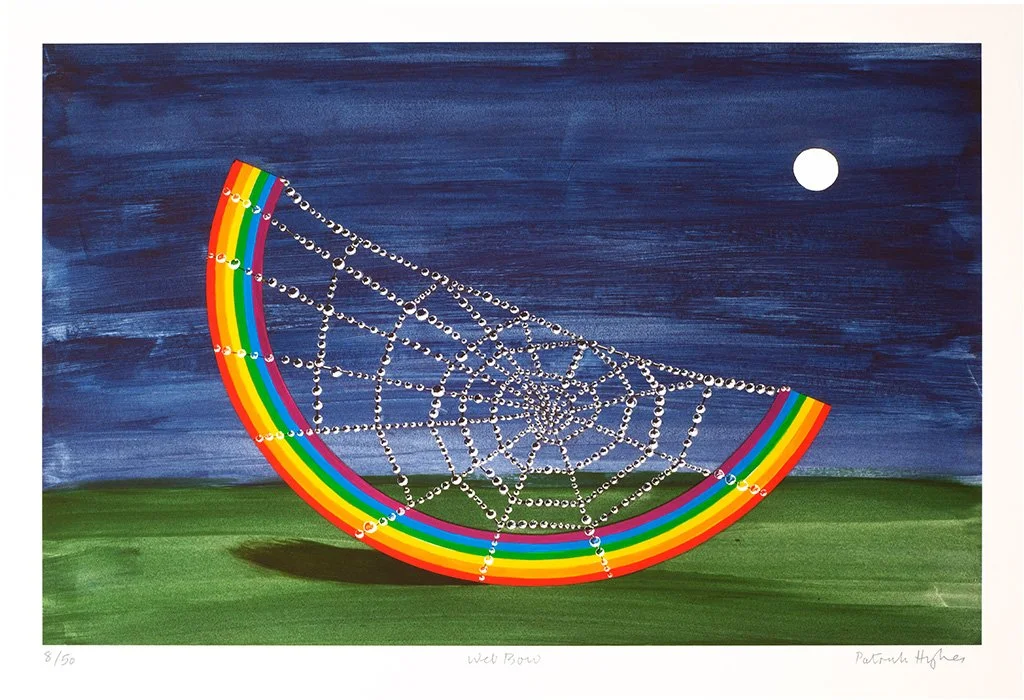
Bow , by Patrick Hughes . Photo from https://www.patrickhughes.co.uk/
Humour, irony, and play
Although Patrick speaks about philosophy and infinity, there is also a strong sense of humour in his work.
When I asked him whether humour matters to him, he answered very directly: “Yes. Very.”
He said that you need, at the very least, a sense of irony. That is something you can feel in the work , not just in the visual surprise, but in the way objects behave against expectation.
Some artists take themselves very seriously, but Patrick seems more interested in play, contradiction, and imagination. Even when the thinking behind the work is complex, there is still lightness in the way he talks about it.
Towards the end, I asked him something more personal: how at the age of 87 he stays inspired , and how he has kept such energy and curiosity. I told him that I sometimes go through long periods of doubt myself, and that there are times when I lose creative momentum. His answer was honest and very him.
“From a point of view of the psychology, I haven’t got long left, so you have to try even harder perhaps.”
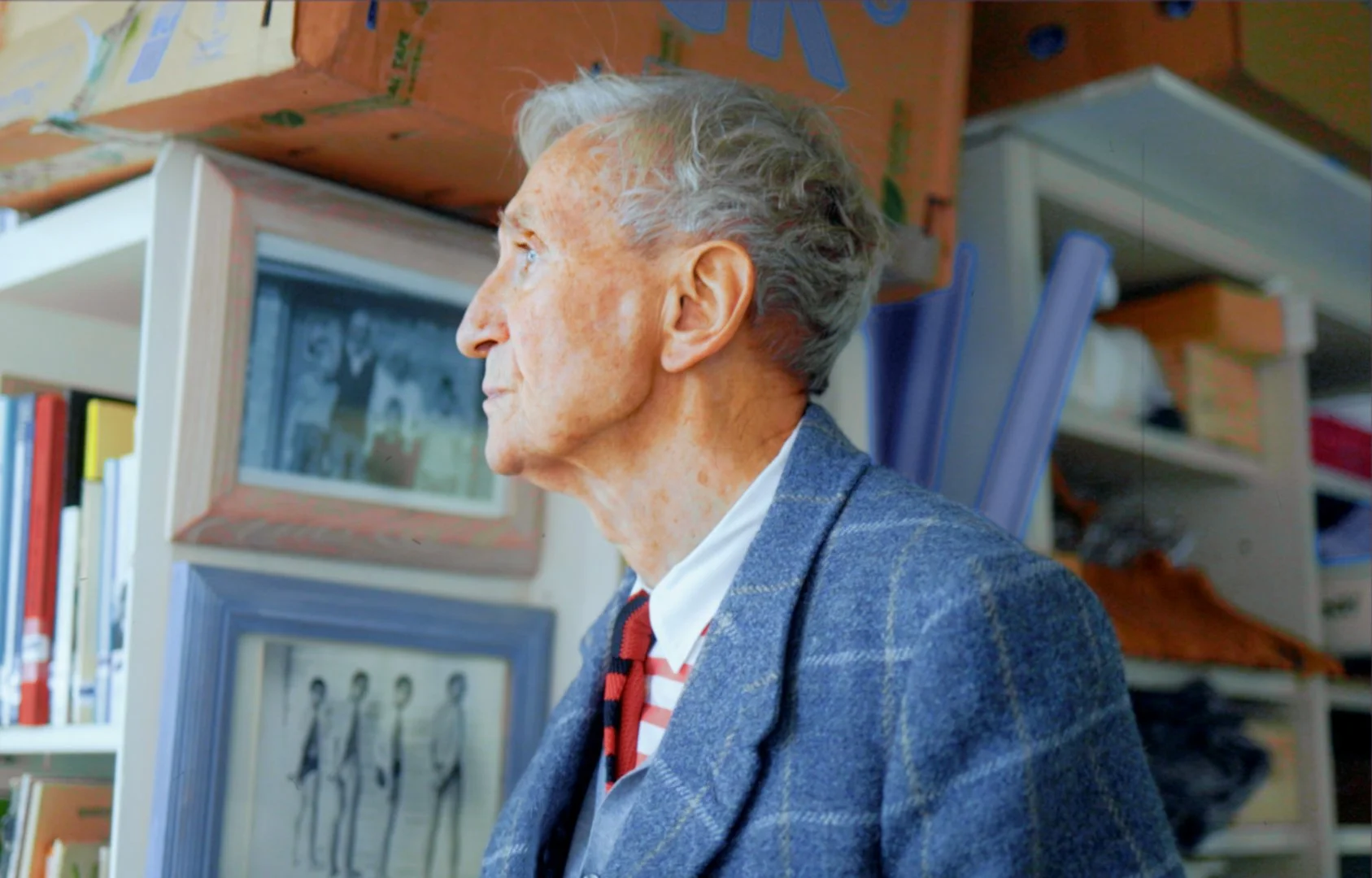
Patrick in his London Studio . Photo by Aris Mercury
It was funny, but also true in a deeper way. He still
has curiosity. He still wants to make new things. He
still wants to think differently.
And maybe that is what stayed with me most after
visiting his studio. Not only the works themselves,
but the fact that after all these decades he is still
asking questions, still experimenting, and still finding ways to surprise himself.
After leaving Patrick Hughes’s studio, I kept thinking about reverspective not only as an artistic invention, but almost as a way of looking at life. In Patrick’s work, the thing that appears closest is often the thing that is furthest away. What seems to move towards you is moving away. What looks solid is hollow. What feels certain becomes unstable the moment you change position.
There is something strangely comforting in that contradiction.
At this point in my own life, while trying to build something creative, I often feel that way too ,close and far at the same time. Certain and uncertain. Moving forward while feeling slightly lost. Trying to make something solid out of doubt.
Maybe that is why Patrick’s work stayed with me so much. It turns contradiction into form. It makes confusion elegant. It makes the impossible feel almost logical.
Of Hands and Heart is a documentary series by London-based filmmaker Aris Mercury, exploring artists, artisans, makers, and people whose work carries history, skill, and personal meaning.
Some shape objects with their hands; others care for places, tools, machines, or practices that have existed for generations. What makes each story unique is not only the work itself, but the person behind it: their character, memories, discipline, and the personal way they bring meaning to what they do.
These films are made to slow down, observe, and reveal something honest about craft, heritage, beauty, and the people who keep meaningful work alive.